Whether you are a new seller or you have prior experience in real estate transactions, it is important to remain aware of common errors that may impede a successful sale. Within this blog post, we

Dated: February 9 2024
Views: 399
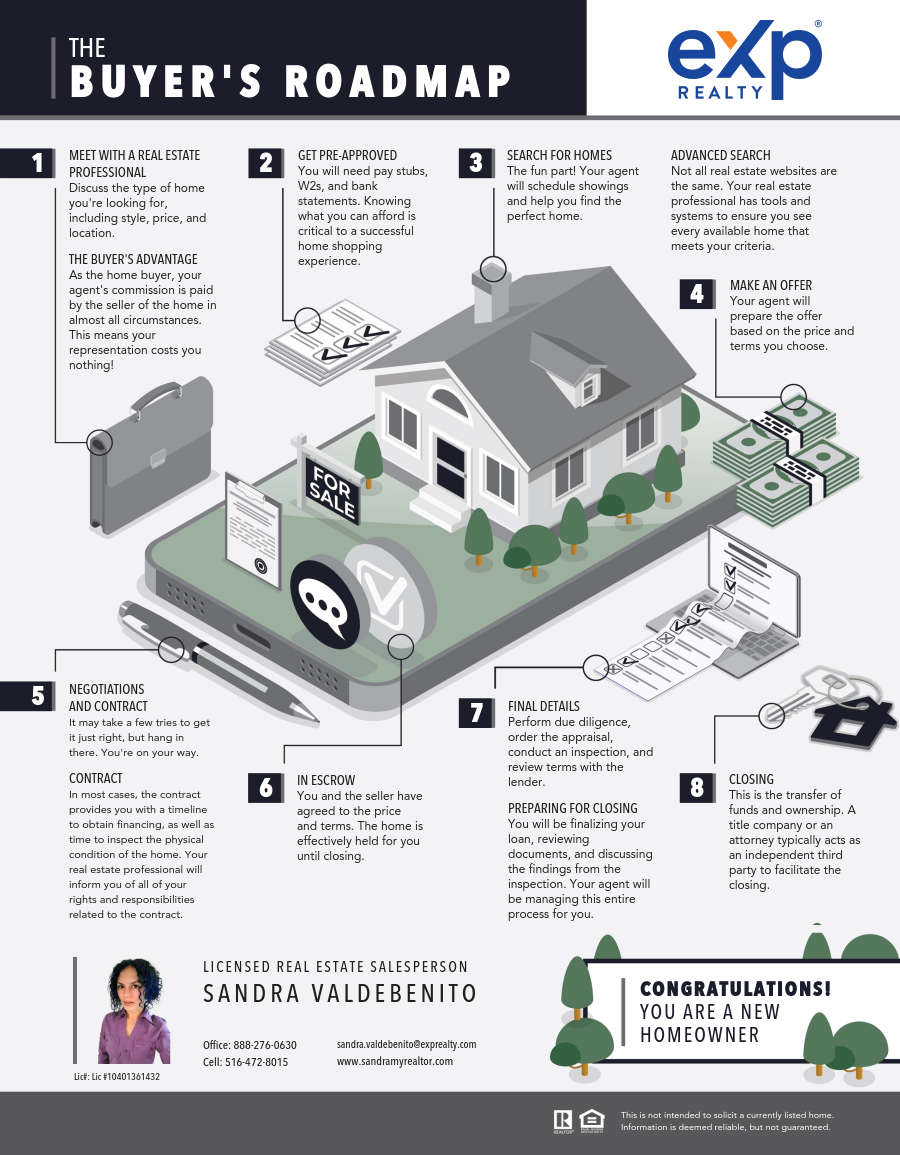
This step-by-step guide is designed to help you navigate through the home buying process, providing you with an overview of what to expect.
1. Assess Your Finances:
Tip: It's also a good idea to have some emergency funds in case the home needs unexpected repairs or anything else that life brings on.
2. Get Pre-Approved for a Mortgage:
- Consult with a mortgage lender.
- Provide necessary financial documents.
- Receive a pre-approval letter indicating your budget.
Make sure that you are doing the due diligence to get the best agent to represent you.
Choose a qualified agent with local expertise and Communicate your preferences and budget.
Buying a home requires a lot of people involved, from realtors and lawyers to mortgage lenders, you'll engage with several business experts during the entire home buying journey.
Typically, a home purchase agreement hinges on a comprehensive examination conducted by a skilled home inspector. Acting on your behalf, this expert meticulously assesses the property you intend to purchase, pinpointing any potential issues and furnishing a detailed report.
Hire a real estate attorney to act on your behalf. This legal professional will scrutinize and authorize all pertinent legal documents, representing you both at the closing and, if required, during negotiations. It's important to note that the sellers involved in the transaction are likely to have their own real estate attorney working on their behalf.
A home insurance agent is a representative affiliated with an insurance company or agency, dedicated to collaborating with you to ensure adequate coverage for your new home. This financial expert will furnish you with a policy designed to safeguard and protect your assets.
The title insurer is the organization that carefully examines the property's title when you're buying it. They ensure that the legal rights to the property can be smoothly transferred from the current owner to you. This involves a thorough analysis of the property's history to check if anyone else, aside from the current owners, might have legitimate claims to the property.
1. Coordinate with Your Agent:
2. Closing Day:
1. Transfer Utilities:
The home buying process may seem overwhelming, but with careful planning and the right professionals by your side, it can be a rewarding experience.
Embarking on the journey of buying a home is an exciting adventure, and I am here to guide you every step of the way. As a successful communicator in the real estate industry, I understand the importance of clear communication and personalized assistance.
If you have any questions, concerns, or if you're ready to start the process, don't hesitate to reach out. I am eager to share my expertise and ensure your home buying experience is not only seamless but also tailored to your unique needs.
Feel free to give me a call at 516 472 8015.
Let's make your dream home a reality together.

Hi, I’m Sandra Valdebenito, and I’m thrilled to help you navigate your real estate journey!With over a decade of experience in Long Island, I’ve had the privilege of guiding buyers, ....
Whether you are a new seller or you have prior experience in real estate transactions, it is important to remain aware of common errors that may impede a successful sale. Within this blog post, we
Step-by-step Guide to Buy a HomeCongratulations on deciding to buy a home!This step-by-step guide is designed to help you navigate through the home buying process, providing you with an overview of
MEET WITH A REAL ESTATE PROFESSIONALThere's no commitment required on your part for the initial meeting. It will be educational and help you identify your next steps. Choose a qualified agent
APPLY FOR A LOAN MODIFICATION & AVOID FORECLOSUREHardship letterThis letter should include the reason(s) you fell behind on your mortgage, examples: loss of income, death, divorce etc. You
Cell: 516-472-8015
Should you require assistance in navigating our website or searching for real estate, please contact our offices at 888-276-0630.
Standardized Operating Procedures
 OneKey® MLS required Copyright, Source of Data and Disclaimer for IDX display
Information Copyright 2026, OneKey® MLS. All Rights Reserved.
The source of the displayed data is either the property owner or public record provided by non-governmental third parties. It is believed to be reliable but not guaranteed. This information is provided exclusively for consumers' personal, non-commercial use.
The data relating to real estate for sale on this website comes in part from the
IDX Program of OneKey® MLS.
OneKey® MLS required Copyright, Source of Data and Disclaimer for IDX display
Information Copyright 2026, OneKey® MLS. All Rights Reserved.
The source of the displayed data is either the property owner or public record provided by non-governmental third parties. It is believed to be reliable but not guaranteed. This information is provided exclusively for consumers' personal, non-commercial use.
The data relating to real estate for sale on this website comes in part from the
IDX Program of OneKey® MLS.
33. Required DMCA Notice
The Digital Millennium Copyright Act of 1998, 17 U.S.C. §512, the DMCA, provides recourse for copyright owners who believe that material appearing on the Internet infringes their rights under U.S. copyright law. If you believe in good faith that any content or material made available in connection with our website or services infringes your copyright, you (or your agent) may send us a notice requesting that the content or material be removed, or access to it blocked. Notices must be sent in writing by email to DMCAnotice@MLSGrid.com. The DMCA requires that your notice of alleged copyright infringement include the following information: (1) description of the copyrighted work that is the subject of claimed infringement; (2) description of the alleged infringing content and information sufficient to permit us to locate the content; (3) contact information for you, including your address, telephone number and email address; (4) a statement by you that you have a good faith belief that the content in the manner complained of is not authorized by the copyright owner, or its agent, or by the operation of any law; (5) a statement by you, signed under penalty of perjury, that the information in the notification is accurate and that you have the authority to enforce the copyrights that are claimed to be infringed; and (6) a physical or electronic signature of the copyright owner or a person authorized to act on the copyright owner\'s behalf. Failure to include all of the above information may result in the delay of the processing of your complaint.
Show More...